

Introduction
A lot of homeowners around Powder Springs shrug off falling branches the first few times it happens.
Especially smaller ones.
People usually assume:
- the weather caused it
- squirrels knocked something loose
- the tree is “just shedding”
- storms probably weakened a branch
Sometimes that is true.
But repeated limb drop, especially during Georgia summer weather, usually means the tree is already struggling with something deeper structurally.
That is the part homeowners miss.
At Quality Diversified Services, repeated branch failure becomes one of the most common early warning signs crews notice before larger tree problems develop around homes throughout Powder Springs, Marietta, Austell, Douglasville, and surrounding Northwest Atlanta communities.
The tree is often communicating stress long before major failure happens.
People just do not always recognize the pattern early enough.
Trees Usually Do Not Drop Healthy Limbs Repeatedly
This surprises homeowners constantly.
A perfectly healthy mature tree generally holds onto major limbs very well, even during rough weather. When branches keep falling over and over, something underneath is usually changing.
Especially when homeowners notice:
- the same side of the tree losing limbs
- branches dropping after mild wind
- deadwood increasing every year
- cracking sounds during storms
- larger limbs falling than before
That gradual escalation matters.
At Quality Diversified Services, repeated limb drop often signals deeper issues involving:
- internal decay
- overextended canopy weight
- storm stress
- root instability
- weakened branch unions
The branch itself is often only part of the problem.
Georgia Heat Quietly Stresses Trees More Than People Realize
Especially during long stretches of hot weather around Northwest Atlanta.
Trees across Powder Springs spend entire summers dealing with:
- intense heat
- humidity
- drought periods
- compacted soil
- sudden storms
That combination slowly wears trees down over time.
A tree may still look green overall while internally struggling to support the canopy safely anymore.
At Quality Diversified Services, summer heat stress becomes especially noticeable in mature trees already carrying old storm damage or excessive canopy weight.
Then once storms arrive later in summer, weakened limbs start failing more frequently.
Large Limbs Become Extremely Dangerous Near Homes
This part escalates fast.
A limb falling in the woods usually becomes cleanup work.
A limb falling over:
- a roof
- a driveway
- a parked vehicle
- a patio
- a power line
becomes something completely different.
Especially in neighborhoods around:
- Powder Springs
- Marietta
- Austell
- Woodstock
where mature trees often sit close to homes and neighboring properties.
At Quality Diversified Services, emergency calls regularly involve homeowners who noticed smaller branch drops earlier but did not realize larger structural failures were becoming more likely afterward.
That progression happens slowly enough people often normalize it.
Until something major finally breaks.
Deadwood Builds Gradually
This is another thing homeowners adapt around without noticing.
One dead branch appears.
Then another the next season.
Then eventually the canopy starts looking thinner in certain sections while larger deadwood begins hanging over parts of the property people use daily.
The tree may still appear mostly alive overall, which makes the situation confusing emotionally.
People think:
“Well most of it still looks healthy.”
At Quality Diversified Services, deadwood accumulation often becomes one of the clearest indicators a mature tree is declining structurally long before full tree failure happens.
That decline usually happens gradually over years.
Storm Damage Weakens Limbs Long Before They Finally Fall
This gets overlooked constantly around Georgia.
A tree might survive one storm but still suffer:
- internal cracking
- weakened branch attachments
- bark separation
- hidden stress fractures
The limb remains attached afterward, so homeowners assume everything held together fine.
Meanwhile the branch may already be structurally compromised underneath.
Then months later another storm or even strong summer wind finally pushes the weakened limb past its limit.
At Quality Diversified Services, post-storm inspections help identify branches carrying hidden damage before future weather creates larger emergencies later.
That preventative attention matters.
Especially around older trees.
Mushrooms And Rot Near Limbs Matter More Than People Think
Homeowners sometimes notice:
- mushrooms near the trunk
- soft bark
- hollow sections
- dark spots near large branch unions
and assume it is cosmetic.
Usually it is not.
Decay weakens wood internally, which means heavy limbs can lose structural strength long before the outside appearance changes dramatically.
At Quality Diversified Services, fungal decay around branch unions becomes especially concerning because limb weight creates enormous pressure at attachment points already weakened internally.
That combination creates real failure risk during storms.
Improper Pruning Creates Huge Long-Term Problems
This becomes a major issue around residential properties.
Especially when inexperienced crews:
- top trees aggressively
- remove limbs improperly
- leave large open cuts
- create uneven canopy balance
The tree often survives initially.
But over time those pruning shortcuts create:
- weak regrowth
- unstable branch structure
- decay pockets
- excessive limb stress
At Quality Diversified Services, pruning follows professional arboriculture and safety standards designed to strengthen long-term tree structure instead of weakening it gradually over time.
That difference becomes obvious years later during storm season.
A Lot Of Homeowners Notice The Pattern Too Late
This happens constantly after emergency calls.
Once major limbs finally fall, homeowners suddenly remember:
- smaller branches dropping before
- dead sections increasing
- cracking sounds
- bark changes
- leaning shifts
- repeated cleanup after storms
The tree had usually been communicating structural stress already.
The signs simply felt manageable until the situation escalated.
At Quality Diversified Services, proactive tree assessments help homeowners identify those warning signs before larger failures damage property later.
That preventative approach often saves:
- roofs
- fences
- vehicles
- emergency removal costs
- insurance headaches
all at once.
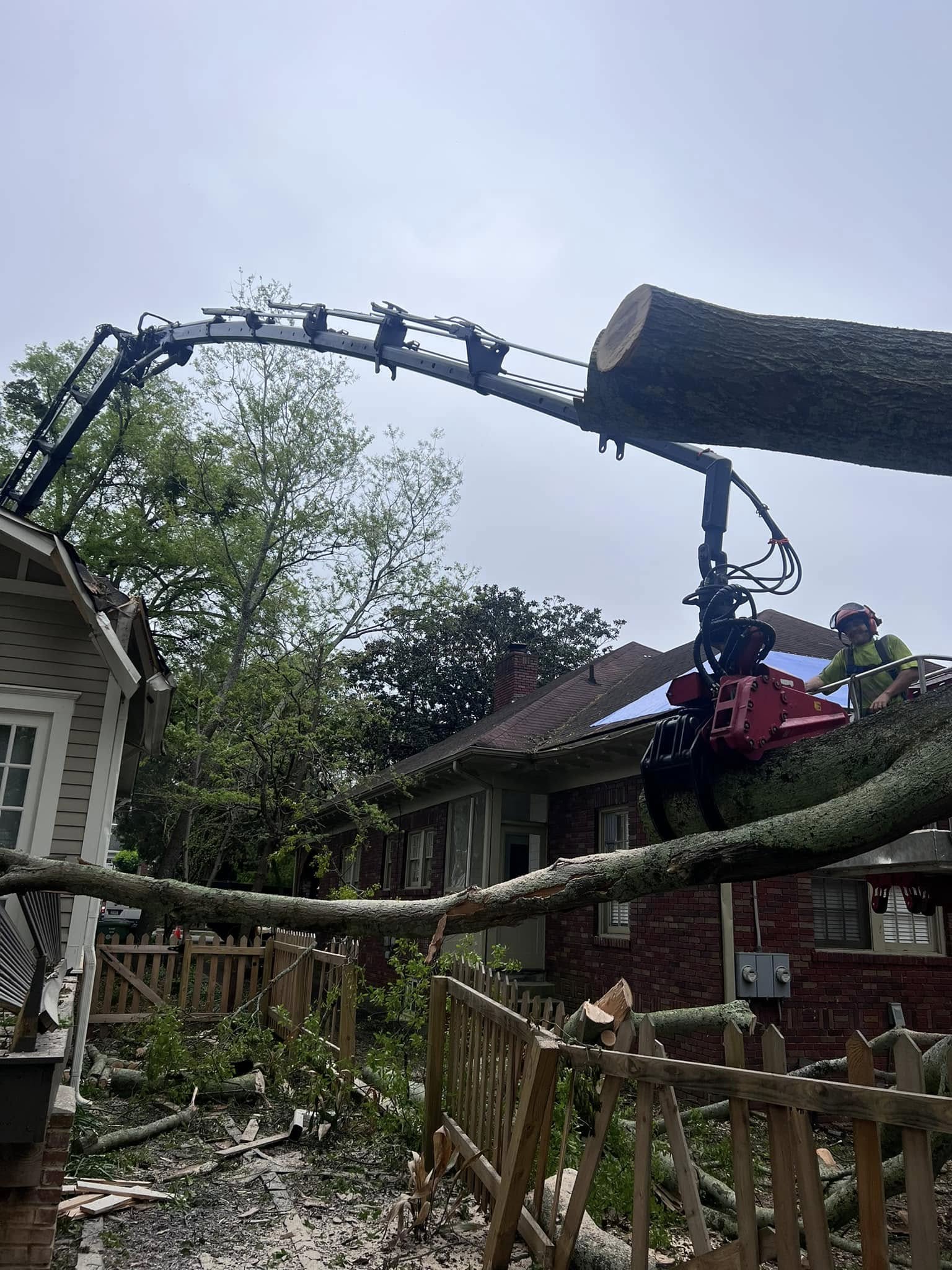
Robotic Tree Removal Changes Dangerous Jobs Completely
This becomes especially important once large limbs start failing near homes.
Traditional removals often require climbers working high inside structurally compromised trees.
That creates enormous risk when:
- limbs remain cracked
- branches hang over structures
- canopy weight shifts unpredictably
- storms already weakened the tree
At Quality Diversified Services, robotic tree removal technology allows dangerous limbs and trees to be dismantled more safely and efficiently while reducing risk to workers and surrounding property.
That technology matters enormously during difficult residential removals.
Summer Storms Usually Make Existing Problems Worse
This is probably the biggest pattern overall.
The storm itself often gets blamed entirely.
But usually:
- the branch was already weakened
- the tree already carried decay
- canopy stress already existed
- storm damage had accumulated for years
The weather simply exposed how compromised the structure had already become underneath.
At Quality Diversified Services, many emergency removals involve trees homeowners assumed were healthy simply because the canopy still looked mostly green beforehand.
That visual disconnect catches people off guard constantly.
Emergency Tree Situations Feel Overwhelming Fast
Especially once large limbs land near:
- bedrooms
- driveways
- vehicles
- fences
- patios
Homeowners immediately start worrying about:
- additional limbs falling
- roof damage
- insurance claims
- blocked access
- family safety
That stress builds quickly.
At Quality Diversified Services, 24/7 emergency response helps homeowners throughout Northwest Atlanta restore safety quickly after dangerous limb failures and storm damage situations.
That reassurance matters emotionally too.
Especially during the active storm season.
Frequently Asked Questions
Is repeated limb drop a warning sign?
Usually yes.
Repeated branch failure often indicates deeper structural problems involving decay, stress, storm damage, or weakened branch attachments.
Can a tree still look healthy while becoming dangerous?
Absolutely.
Many trees still appear green and alive while internal decay or structural weakness develops underneath.
Should dead limbs be removed immediately?
Deadwood near homes, driveways, roofs, or high-traffic areas should receive professional evaluation quickly because large limbs can fail unexpectedly.
What makes QDS different?
Quality Diversified Services uses robotic tree removal technology while following OSHA and ISA safety standards for safer, more efficient removals throughout Northwest Atlanta.
What areas do you serve?
QDS serves Powder Springs, Marietta, Austell, Woodstock, Douglasville, Fayetteville, Carrollton, Newnan, and surrounding Northwest Atlanta communities.
Conclusion
A lot of dangerous trees around Powder Springs start warning homeowners long before major failure actually happens.
Usually the signs appear gradually:
- repeated limb drop
- deadwood
- cracking
- thinning canopy
- storm damage
- structural stress
Then one summer storm finally pushes the tree past its limit.
Quality Diversified Services helps homeowners throughout Northwest Atlanta stay protected with robotic tree removal technology, professional pruning, emergency storm response, OSHA and ISA safety standards, licensed and insured crews, and more than 30 years of trusted local experience serving Georgia homeowners since 1993.
Concerned About Falling Limbs Around Your Property?
Call Quality Diversified Services at (678) 776-9820 for a free estimate or professional tree assessment anywhere across Northwest Atlanta.

