

Introduction
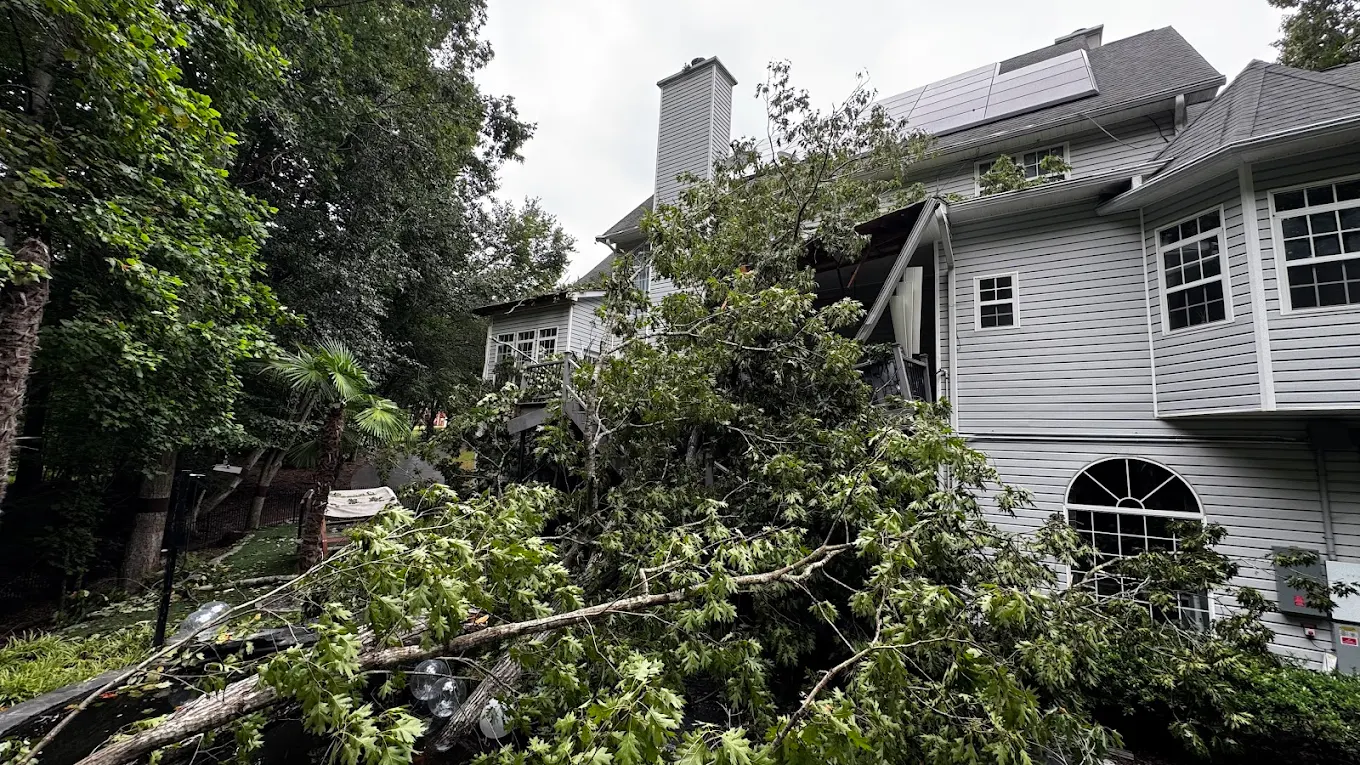
After a big storm moves through Northwest Atlanta, most homeowners look at the obvious damage first.
That makes sense.
People notice:
- the giant limb on the driveway
- the split tree near the fence
- debris covering the backyard
- branches hanging over the roof
But experienced tree crews usually start looking somewhere else almost immediately.
Not because they ignore the obvious damage.
Usually because storms create a second layer of hidden structural problems homeowners cannot easily see from the ground.
At Quality Diversified Services, post-storm emergency calls throughout Marietta, Woodstock, Powder Springs, Austell, Douglasville, and surrounding Northwest Atlanta communities often involve trees that suffered much more internal stress than homeowners initially realized after the weather cleared.
The visible damage is sometimes only part of the story.
That catches people off guard constantly after severe Georgia storms.
The First Thing Crews Usually Watch For Is Ground Movement
This surprises homeowners all the time.
Most people immediately stare up into the canopy after storms looking for broken limbs. Experienced crews often check the base of the tree first.
Especially around:
- exposed roots
- lifted soil
- cracked ground
- shifting trunks
- leaning changes
Because once the root system starts moving, the entire tree can become unstable very quickly.
At Quality Diversified Services, partially uprooted trees become especially dangerous after long periods of heavy rain because saturated Georgia soil loses some of its ability to anchor large root systems securely.
A tree might still appear mostly upright while the support underneath has already started failing.
That situation gets risky fast near homes.
Trees Often Crack Internally Before Homeowners Notice Anything
This part makes storm damage tricky.
A large tree may survive high winds without completely falling, but internally the trunk or major branch unions may already contain:
- stress fractures
- hidden splitting
- weakened attachment points
- internal cracking
From the yard, the tree still looks “mostly okay.”
Then another storm arrives two months later and suddenly the canopy fails dramatically.
At Quality Diversified Services, post-storm assessments often reveal structural damage homeowners never realized existed because much of the stress stays hidden inside the wood initially.
That delayed failure pattern happens constantly after summer storms.
Hanging Limbs Become One Of The Biggest Immediate Risks
Especially after strong wind events.
A branch may partially break but remain suspended high above:
- driveways
- roofs
- patios
- sidewalks
- neighboring property
Homeowners sometimes assume:
“Well it already survived the storm.”
That assumption becomes dangerous.
Storm-damaged limbs often remain under enormous tension afterward. Additional wind, weight shifts, or even gravity alone can suddenly bring them down later.
At Quality Diversified Services, hanging limbs become one of the first hazards crews prioritize because unpredictable branch movement creates serious injury and property damage risk.
Especially around residential properties where families continue walking underneath the canopy afterward.
Summer Storms Expose Weak Trees Faster Than Homeowners Expect
This pattern repeats constantly around Northwest Atlanta.
A tree may spend years quietly dealing with:
- decay
- storm stress
- deadwood
- poor pruning history
- root problems
without obvious outward collapse.
Then one severe storm finally exposes everything at once.
At Quality Diversified Services, homeowners often say:
“That tree looked perfectly healthy before the storm.”
Meanwhile crews quickly notice warning signs like:
- hollow sections
- bark separation
- unstable root flare
- dead upper canopy
- weak branch unions
The storm usually did not create all the problems.
It simply exposed the ones already developing quietly underneath.
Trees Near Homes Require Completely Different Removal Planning
Especially around:
- Marietta
- Powder Springs
- Austell
- Woodstock
where large mature trees often stand close to homes and neighboring property lines.
A damaged tree near a house cannot simply be dropped into the yard safely.
Storm removals often require:
- sectional dismantling
- advanced rigging
- canopy balancing
- controlled lowering systems
- technical removal sequencing
At Quality Diversified Services, robotic tree removal technology allows crews to dismantle dangerous trees more safely while reducing risk around structures during storm cleanup operations.
That technology matters enormously once large compromised trees start leaning over homes.
Crews Usually Look For Secondary Failures Too
This is another thing homeowners miss.
Sometimes the obvious damaged tree distracts attention away from nearby trees also affected by the storm.
Experienced crews often inspect surrounding canopy for:
- cracked companion limbs
- twisted trunks
- shifting root zones
- partially broken branches
- stressed neighboring trees
because storm pressure rarely affects only one exact section of the property.
At Quality Diversified Services, secondary storm damage becomes common after severe wind events where multiple trees absorb pressure throughout the same area.
That broader assessment helps prevent future surprises later.
Lightning Damage Usually Looks Worse Weeks Later
This catches people off guard constantly.
Immediately after lightning strikes, homeowners may only notice:
- bark damage
- small splitting
- burnt sections
Then weeks later the tree suddenly begins declining rapidly.
Lightning can create:
- deep internal cracking
- vascular damage
- structural weakness
- canopy dieback
that develops gradually after the strike itself.
At Quality Diversified Services, post-lightning inspections help homeowners determine whether damaged trees remain structurally safe or are becoming larger hazards over time.
That follow-up evaluation matters.
Especially around mature trees near homes.
Improper Cleanup Sometimes Creates Bigger Problems
This happens more than homeowners realize.
After storms, people understandably want debris gone quickly. Unfortunately rushed cleanup by inexperienced crews can accidentally create:
- additional canopy imbalance
- unsafe cuts
- weakened branch structure
- unstable remaining limbs
At Quality Diversified Services, all pruning and storm work follows OSHA and ISA safety standards because poor cleanup decisions often weaken the tree much more long-term afterward.
That professional approach matters.
Especially after major storm damage already stressed the tree heavily.
Homeowners Usually Remember Earlier Warning Signs Afterward
This happens constantly after emergency removals.
Once crews start explaining the damage, homeowners often suddenly remember:
- dead limbs falling before
- leaning changes
- cracking sounds during storms
- mushrooms near roots
- bark separation
- thinning canopy sections
The tree had often been communicating stress already.
The storm simply became the moment those hidden weaknesses finally became visible all at once.
At Quality Diversified Services, proactive tree assessments help identify those warning signs before severe weather creates emergency situations later.
That preventative approach often saves:
- roofs
- driveways
- vehicles
- fencing
- insurance costs
all at once.
Storm Cleanup Feels Emotionally Overwhelming Fast
This part escalates quickly for homeowners.
After severe storms, families suddenly deal with:
- blocked access
- damaged landscaping
- hanging limbs
- insurance concerns
- cleanup decisions
- uncertainty about safety
People often do not know what needs immediate attention first.
At Quality Diversified Services, 24/7 emergency response helps homeowners throughout Northwest Atlanta restore safety quickly while reducing the stress that follows major storm damage situations.
That reassurance matters emotionally too.
Especially after overnight storms.
Robotic Tree Removal Changes Safety During Storm Cleanup
This stands out for homeowners immediately once they see it operating.
Traditional removals often require climbers entering highly unstable trees after storms.
That creates enormous risk when:
- trunks are cracked
- limbs remain suspended
- root systems shifted
- canopy weight moved unpredictably
At Quality Diversified Services, robotic tree removal technology helps crews dismantle dangerous storm-damaged trees more safely and efficiently while minimizing risk around homes and structures.
That technology matters enormously during high-risk removals.
Local Storm Experience Matters
A lot of homeowners simply want:
- fast communication
- honest recommendations
- insured crews
- experienced operators
- reliable emergency response
during stressful storm situations.
At Quality Diversified Services, being locally owned and operated since 1993 matters because Northwest Atlanta storms create very specific tree risks requiring local experience and proper equipment.
That experience matters when dangerous trees are sitting near homes after severe weather.
Frequently Asked Questions
What do tree crews check first after storms?
Experienced crews often check:
- root stability
- leaning changes
- hanging limbs
- trunk cracking
- nearby secondary damage
before beginning removal work.
Are hanging branches dangerous even after the storm passes?
Absolutely.
Storm-damaged limbs often remain unstable and can fall unexpectedly later even after weather clears.
Why do trees fail weeks after storms?
Storms often create hidden structural damage that weakens the tree internally. Additional wind, rain, or weight shifts later can trigger delayed failure.
What makes QDS different?
Quality Diversified Services uses robotic tree removal technology while following OSHA and ISA safety standards for safer storm cleanup and hazardous removals.
What areas do you serve?
QDS serves Marietta, Powder Springs, Woodstock, Austell, Douglasville, Fayetteville, Carrollton, Newnan, and surrounding Northwest Atlanta communities.
Conclusion
A lot of dangerous storm damage around Northwest Atlanta is not fully visible immediately after severe weather passes.
Usually experienced crews notice deeper structural warning signs first:
- shifting roots
- hidden cracking
- suspended limbs
- weakened trunks
- unstable canopy stress
Then over time those hidden problems become much larger hazards.
Quality Diversified Services helps homeowners throughout Northwest Atlanta stay protected with robotic tree removal technology, emergency storm response, OSHA and ISA safety standards, licensed and insured crews, professional tree assessments, and more than 30 years of trusted local experience serving Georgia homeowners since 1993.
Need Help After Storm Damage Around Your Property?
Call Quality Diversified Services at (678) 776-9820 for emergency assistance or a free professional tree assessment anywhere across Northwest Atlanta.

